Acetabular Revision System

A modular solution for severe acetabular defects and pelvic discontinuity utilizing proprietary porous scaffolds.

Client:

Orthopedic Research Institute

Date:

December 2025
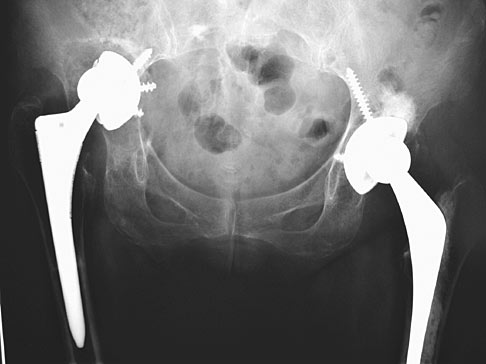
Clinical Overview: Managing Massive Acetabular Voids

Reconstructing the hip in the presence of massive acetabular bone loss remains one of the most formidable challenges in revision arthroplasty. Traditional hemispherical cups often fail to achieve stability when Paprosky Type III defects or pelvic discontinuities are present. The Acetabular Revision System leverages advanced additive manufacturing to bridge these voids, providing a structural scaffold that facilitates biological fixation where conventional implants cannot.

Engineered Porosity and Bio-Integration

The core of this system is our proprietary Tri-Lattice Porous Structure. Unlike traditional coatings that only provide surface-level roughing, this system is printed as a monolithic unit with fully interconnected porosity.

  • Pore Size Optimization: Engineered with a mean pore size of 600–800 microns, specifically tailored to maximize osteoblast migration and vascularization.
  • Modulus Matching: The scaffold is designed to mimic the elastic modulus of cancellous bone, significantly reducing the risk of stress shielding and subsequent bone resorption around the periphery of the defect.
  • Secondary Stability: The interconnected nature of the pores allows for deep bone in-growth, turning the implant into a biological extension of the patient’s pelvis.

Modular Augmentation and Patient-Specific Geometry

No two pelvic defects are identical. This application allows for a modular approach, combining standardized revision cups with patient-specific augments.

  1. Augment Mapping: Utilizing thin-slice CT data, augments are mapped to the specific contours of the ilium or ischium to fill cavitary defects.
  2. Flange Optimization: For cases of pelvic discontinuity, custom structural flanges are engineered to span the fracture site, providing the immediate mechanical rigidity required for weight-bearing.
  3. Screw Path Planning: The system allows for pre-planned screw trajectories to ensure maximum purchase in the remaining healthy bone stock, avoiding neurovascular structures.

Surgical Integration and Mechanical Validation

The Acetabular Revision System is manufactured using Laser Powder Bed Fusion (LPBF) with medical-grade titanium (Ti-6Al-4V). This ensures the device can withstand the high-cycle fatigue loads of a weight-bearing joint while maintaining a lightweight profile.

Key Clinical Advantages:

  • Anatomical Restoration: Restores the native center of rotation, which is critical for hip biomechanics and abductor muscle function.
  • Reduced Operative Time: By providing a "press-fit" augment that matches the defect, surgeons spend less time contouring standard mesh or bone graft.
  • High-Fidelity Fit: The micro-topography of the 3D-printed surface provides exceptional initial "scratch fit" stability, which is the prerequisite for long-term biological fixation.

Summary of Evidence and Regulatory Path

Current clinical studies focused on 3D-printed porous titanium in the pelvis indicate high rates of success in limb salvage and complex revision. By adhering to rigorous FDA regulatory pathways and focusing on evidence-based innovation, this system provides a validated solution for the most difficult hip reconstructions in modern orthopedics.

Partner with Additive Orthopaedics today.

Join a trusted ecosystem dedicated to the advancement of 3D-printed implant technologies. We transform complex anatomical challenges into clinical successes through evidence-based innovation and regulatory transparency.

Clinically Validated
Innovation-Driven
Regulatory-Aware